
Andhra Pradesh is spearheading an ambitious initiative to establish a fully integrated beach sand minerals, rare earth, and titanium ecosystem, aiming to attract over 50,000 crore in investments over the next decade. This move is part of India's broader strategy to reduce its reliance on China for strategic minerals and permanent magnets, with the state preparing a comprehensive rare earth policy and planning specialised industrial clusters.

The Indian government has introduced a bill to overhaul the civil nuclear sector, allowing private participation and establishing a new liability regime. The SHANTI Bill, 2025, aims to repeal existing acts and address industry concerns.
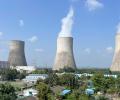
The Bill is likely to pave the way for amending two existing legislations -- the Atomic Energy Act 1962, and the Civil Liability for Nuclear Damage Act 2010.
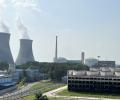
Government sources said amendments were being considered to the Atomic Energy Act to allow private sector participation and the Civil Liability for Nuclear Damage Act to limit the liability on suppliers of equipment to build atomic energy plants.

India's nuclear energy share in total installed capacity remains limited, fluctuating between 1.9 per cent and 2.9 per cent from FY10 to FY24.

'We were in a heavily nuclearised environment. China had tested for Pakistan in the 1980s and helped their missile programme stay just one step behind us.'

The urgency for a resolution is underscored by the military situation, as joint operations by Israel and the US have consistently been "targeting Iran's missile systems, launch sites and other critical infrastructure" since the onset of the conflict.
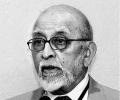
M R Srinivasan focused on the peaceful use of nuclear power at a time when the popular view among the 'hawks' was that India should build a nuclear arsenal as a deterrent.

Over the years, India-EU ties have grown, and covered trade, investment, climate change, science and technology, space, digital, mobility, and connectivity.

What we are watching is something different: A fog manufactured and maintained by the people who started the war, so that the question of why it was started never has to be answered, observes Prem Panicker in his must read blog on the war in the Middle East.
Whether the ambitious targets are achievable is a moot question as India's earlier target was 20,000 MW of nuclear power by 2020.

The threat of wars hovers over the negotiations in Oman, but the good part is that Trump called the talks to be 'very good' and Iran's President Masoud Pezeshkian responded that they 'constitute a step forward', points out Ambassador M K Bhadrakumar.
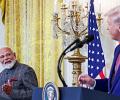
Prime Minister Narendra Modi and US President Donald Trump have vowed to move forward with plans to work together to build US-designed nuclear reactors in India. The decision was made during their meeting at the White House, where they also agreed to significantly expand energy cooperation. The move comes after India announced plans to amend its nuclear liability law and the Atomic Energy Act, which had previously been obstacles to the implementation of the US-India civil nuclear deal.
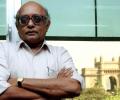
'He was deeply committed to nurturing young talent and encouraging interdisciplinary collaboration.'
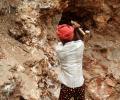
The Centre has proposed allowing captive mine owners to sell minerals in the open market after meeting the requirement of their linked end-use plants, as part of a broader overhaul of mineral concession rules aimed at easing operational restrictions and encouraging deeper mineral exploration.
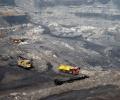
The government plans to establish a fully indigenous manufacturing ecosystem with an annual production capacity of up to 6,000 tonnes. The scheme is expected to run for seven years, according to official documents.

Pitching for enactment of a law to fix civil damages caused by nuclear accidents, Atomic Energy Commission Chairman Srikumar Banerjee said neither the Indian Environmental Protection Public Liability Insurance Act, 1991, nor the Indian Atomic Energy Act had provisions for damages caused due to war or radioactivity.
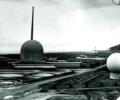
Indicating a greater role of the private sector in the field of nuclear energy, Prime Minister Narendra Modi said there was a need to tap additional sources of investments for the ambitious expansion programme.

'Our problem is not a budget deficit but a trust deficit. We need to trust our institutions and industries to innovate and lead. That is the way forward for India.'

'Bharat Small Reactors are essentially similar to the existing 220 MWe Pressurised Heavy Water Reactors. The existing regulations are applicable for BSRs.'
The office was established a few years back following discovery of high-grade uranium in the area.
Presenting the Union Budget, Sitharaman announced that the government will partner with the private sector to set up Bharat Small Reactors and in the research and development of small modular reactors.

AAERB's permission for RAPP-7 paves the way for the subsequent phases of reactor commissioning leading to its commercial electricity generation.

The crises of the 21st century, 9/11, the economic meltdown, COVID-19, Russia-Iran war and the Hamas-Israel war seem to be never ending. In this situation, Iran might be contemplating a nuclear deterrent to defend itself, observes Ambassador T P Sreenivasan, the distinguished long-time Rediff contributor who turns 80 on June 17..
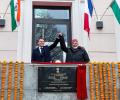
Prime Minister Narendra Modi and French President Emmanuel Macron have called for enhancing trade and investment ties between their countries and committed to further deepening their engagement in the Indo-Pacific. They discussed a full spectrum of bilateral relations, including key global and regional issues, and stressed the urgent need for reform in the United Nations Security Council. The leaders also underscored their commitment to ensuring the global AI sector can drive positive social, economic, and environmental outcomes.

If as critics point out, the environmental impact assessment study was commissioned only after the auction process got underway with not all the stakeholders getting to know of it, then the government has already compromised the trust it could have enjoyed with Kerala's public including its coastal communities, points out Shyam G Menon.
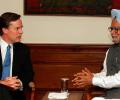
The India-US nuclear deal was aimed at ending India's nuclear isolation and nuclear apartheid, recalls Rup Narayan Das.
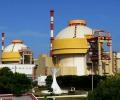
Union minister Jitendra Singh assured the members of the Rajya Sabha on Thursday that there is better nuclear safety in India as compared to many other countries and there are enough safeguards in the Indian nuclear plants.

On Dr Homi J Bhabha's 110th birth anniversary, Dr K S Parthasarathy shares some personal memories of the legendary nuclear scientist.
The project will research a clean and limitless alternative to dwindling fossil fuel reserves by testing nuclear fusion.
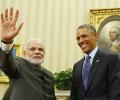
With their landmark 2005 civil nuclear deal still in limbo, India and the United States have established an inter-agency contact group to sort out outstanding liability and technical issues to fast-track its full implementation.

Nehru's faith in science and technology, his genuine respect for Bhabha, and their burning ambition worked synergistically to place India on the nuclear map of the world. Atomic energy developed and prospered because of Nehru's vision fulfilled by Bhabha's mission, recalls K S Parthasarathy, former secretary of the Atomic Energy Regulatory Board, on the occasion of India's first prime minister's 119th birthday today.

Rocket Boys offer an overwhelming experience to me and many others who saw Homi Bhabha in action at Trombay, observes Dr K S Parthasarathy, former Secretary, Atomic Energy Regulatory Board.

The major advantages of such plants are no need of land to build the reactors, earthquake resistant, abundance of water for active or passive cooling.

... And it's not just fear of job losses, says Ajit Balakrishnan.

To curb rising food prices, the Union government is contemplating using large-scale nuclear irradiation technologyfor increasing the shelf life of fruit and vegetables, particularly that of onions and potatoes.

'Modi knows the people here are opposed to this project, but he is using the might of government to push this port down our throats.'
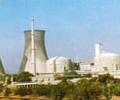
Scientists are puzzled by what caused the mysterious nuclear leak at the Kakrapar Nuclear Power Plant in Gujarat last year, reveals Pallava Bagla.
During Prime Minister Manmohan Singh's wide-ranging talks with his Italian counterpart Romano Prodi in Delhi, the two sides expressed their commitment to work towards establishing a strategic partnership.
 © 2026 Rediff.com - Advertise with us - Disclaimer - Privacy Policy - Sitemap - Feedback - About us - Terms of use - Grievances